
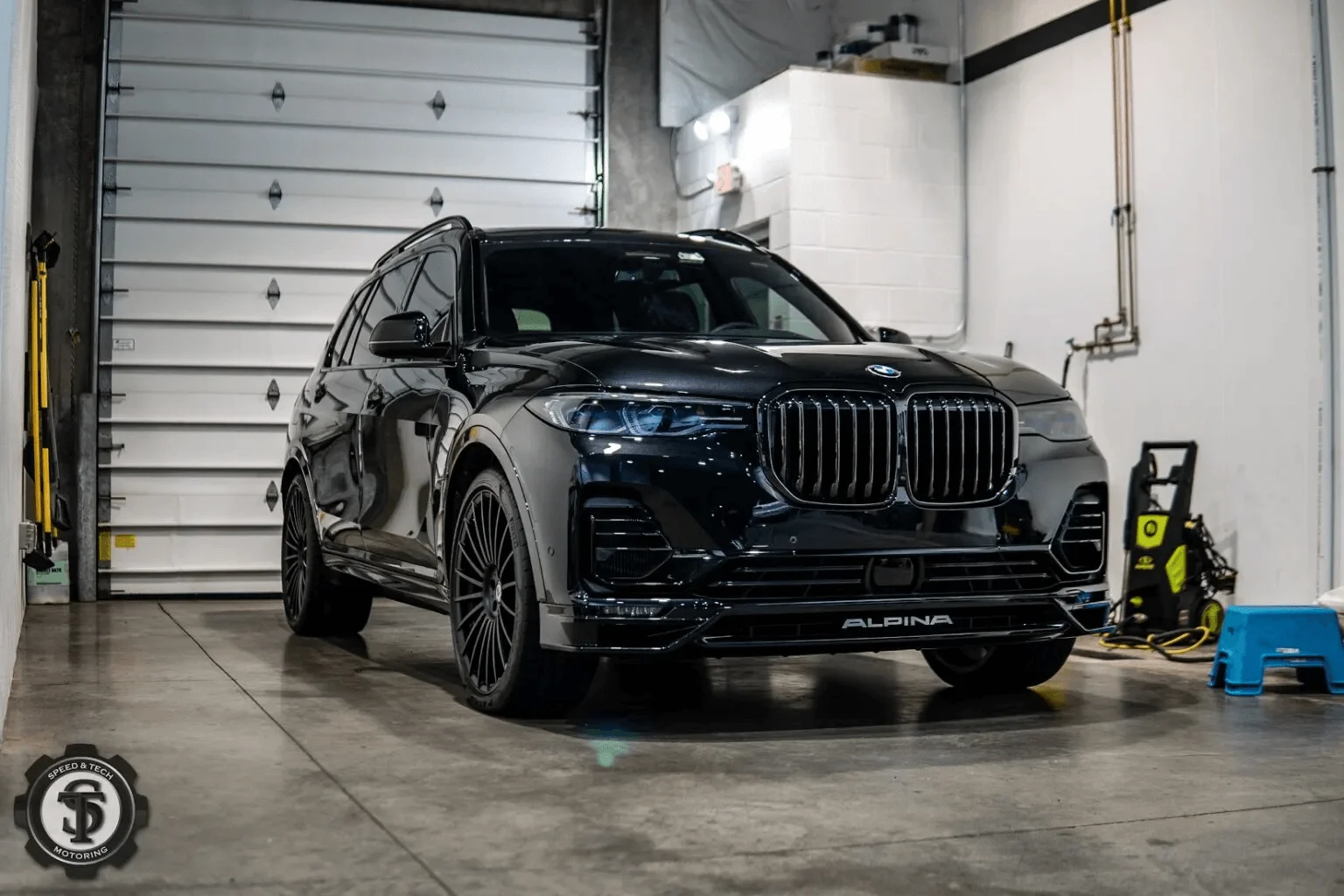

Road salt, summer heat, and gravel kick-up all wear on car paint across Northern Virginia. This guide explains how paint protection film preserves vehicle paint in harsh climates, and where that protection stops. Speed & Tech Motoring installs film on vehicles in Sterling, VA, so the advice reflects local driving conditions.
Drivers comparing coverage options can also review paint protection film in Sterling, VA for packages and installation details.
Does Paint Protection Film Really Protect Car Paint in Harsh Weather?
Yes, within limits. Paint protection film (PPF) is a clear urethane layer bonded over factory paint. Salt, grit, bugs, and light abrasion hit the film first instead of the clear coat.
Paint usually fails in harsh climates through two routes: physical impact and chemical contact. Gravel chips the clear coat, while road salt, bird droppings, and bug remains can etch or stain it. Film covers both routes on the panels it wraps.
Northern Virginia is not a desert or an Arctic zone, but it swings between humid summers and salted winters. That mix tests paint twice a year, and the film takes the wear instead.
How Does Paint Protection Film Work as a Barrier Over Paint?
What Is Paint Protection Film Made Of?
Most premium films stack three parts: a protective top coat, a flexible thermoplastic urethane (TPU) core, and a pressure-sensitive adhesive. The core absorbs small impacts and spreads their force. The adhesive bonds the film to cured paint.
At Speed & Tech Motoring, installers work with XPEL film. Its elastomeric top coat is designed to recover from light marks.
Does Paint Protection Film Really Self-Heal?
Only films built with a self-healing top coat do. XPEL states that light scratches in its film recover in about 20 to 30 minutes at room temperature. Warm water speeds that up in cold weather.
Deeper cuts that break through the top coat stay in place. Self-healing covers swirl marks and light scuffs, not gouges.
What Can Paint Protection Film Stop, and What Can It Not?
Rock Chips, Light Scratches, and Abrasion
Film absorbs the small stones that cause most chips on a highway-speed front end. It also resists light scratches from road grit, brush contact, and wash marks. A large stone at speed can still dent the panel or cut the film, so protection is reduced, not absolute.
Surface Contamination and Staining
Bug acids, bird droppings, and tree sap land on the film instead of the paint. That buys time to remove them safely. Left for days in summer heat, those contaminants can still stain or mark the film surface.
Limits Worth Knowing
PPF does not stop hail dents, collision damage, door dings, or rust that already exists. It also does not protect the underbody or any panel left uncovered. Coverage decides the result.
How Do Northern Virginia Seasons Affect Car Paint?
Winter Brine, Sand, and Freeze-Thaw Cycles
Dulles records January lows in the mid-20s, and VDOT pretreats major routes with salt brine before storms. Sand and grit follow once plowing starts. Freezing nights and daytime thaws can push moisture into chips, which makes small flaws grow.
Summer Heat, UV, Bugs, and Tree Sap
July highs average near 88°F at Dulles, and cars bake in parking lots across Sterling. Heat and UV age unprotected clear coat gradually. Bugs remain, and tree sap also bonds faster in strong sun.
Spring Pollen, Fall Leaves, and Road Gravel
Spring pollen and fall leaves hold moisture against paint for days. Across Sterling and Loudoun County, Speed & Tech Motoring sees the hood, bumper, and mirrors take the worst of it. Gravel kicked up on busy corridors such as Route 28 and the Dulles Greenway adds chips year-round.
What Happens to Unprotected Paint in Salt, Sun, and Gravel?
Factory clear coat is often thinner than a sheet of paper, and it is the only layer facing the weather. Color coat and primer sit beneath it.
A chip breaks that layer. Moisture and salt then reach the paint below, and deep chips that expose metal can start corroding if left alone.
Etching works differently. Acidic bird droppings and baked-on bug remains soften the clear coat. They leave dull marks that polishing may only partly remove.
How Does Paint Protection Film Handle Road Salt and Winter Grime?
VDOT has said it pretreats interstates, primary roads, and busy secondary routes with salt brine before storms. Salt and sand follow as snow falls. Neighborhood streets usually miss pretreatment, but slush from main roads still reaches them on tires.
Film keeps that brine and grit off the paint beneath it. That limits chloride contact and the fine scratches left by grit during washing. It cannot protect uncovered panels, the underbody, or exposed seams where corrosion can begin.
Regular rinses still matter during salt season. Slush caked in wheel arches and door sills can damage uncovered metal even when the front end wears film.
Can Paint Protection Film Handle Summer Heat, UV, Bugs, and Bird Droppings?
Quality film is designed to stay stable in heat, and XPEL says its films resist yellowing. Film does not stop sunlight from aging uncovered paint. Exact UV blocking and lifespan figures vary by film, so owners should read the manufacturer’s data sheet.
Bird droppings, bug remains, and tree sap sit on the film surface instead of bonding to the clear coat. Prompt removal with water and a pH-neutral soap limits staining. Neglected, they can mark the film as well.
Humid summer storms leave mineral spots on any surface. Film does not prevent water spotting, so drying the car after rain still helps.
Which Climate Risks Does Paint Protection Film Help With?
The table below matches common climate risks to the paint concern and the realistic role of film.
| Climate Risk | Paint Concern | What PPF Does |
| Road salt and brine | Chloride contact, dulling, corrosion at chips | Covers painted panels and limits direct contact. Does not protect the underbody or uncovered panels. |
| Sand and gravel | Rock chips and micro-scratches | Absorbs small impacts. A large strike can still damage the film or panel. |
| Freeze-thaw cycles | Moisture working into chips | Reduces new chips on covered panels. Does not repair existing damage. |
| UV and heat | Fading and clear coat aging | Takes the exposure on covered panels. Uncovered paint still ages. |
| Bugs and tree sap | Etching and stains | Contaminants land on the film. Prompt cleaning is still needed. |
| Bird droppings | Acidic etching | Buys time for removal. Can stain the film if left too long. |
| Humidity and rain | Water spots | Does not prevent spotting. Drying after rain helps. |
| Hail | Dents | Offers no reliable dent protection. |
Film plays a protective role on covered panels. It works as one part of a care routine, not a replacement for washing.
Which Parts of a Car Need Paint Protection Film the Most?
High-Impact Panels
The front bumper, hood leading edge, fenders, mirror caps, and rocker panels collect the most debris. The area behind each wheel also catches spray and grit. Those panels take hits first, so they gain the most from film.
Partial Front, Full Front, and Full Body Coverage
Partial front packages typically cover the bumper, the leading hood and fender sections, and the mirrors. Full front adds the entire hood and fenders.
Full body covers every painted panel and suits owners who want uniform protection. Package contents vary by shop and vehicle.
How Do Installation Quality and Edge Finishing Affect Results?
Salt, water, and dirt creep in at film edges first, so edge finishing shapes how long coverage stays clean. Tucked or wrapped edges tend to resist lifting better than exposed cut lines.
Preparation matters just as much. Paint needs washing, decontamination, and inspection before film goes on, since trapped grit shows through as bumps and weakens adhesion.
Film quality counts too. Premium urethane films carry manufacturer warranties, though terms differ by film, coverage, and installer, so owners should read the paperwork.
When Is the Best Time to Install Paint Protection Film in Northern Virginia?
New vehicles gain the most, because film goes on before chips and etching start. Fall installs also finish before the first salted storms.
Cars with existing damage can still wear film, but clear film covers flaws instead of fixing them. Chips and swirls stay visible beneath it, so owners often correct paint first.
A controlled indoor bay lets installers work in any season, so winter dates remain an option.
How Should Paint Protection Film Be Washed and Maintained?
According to XPEL’s product care guidelines, fresh film needs 48 hours before washing, followed by a gentle hand wash. The same guidance says to keep pressure washers at least 3 feet from the paint. High pressure near film edges can lift them.
Avoid unapproved solvents, abrasive polishes, and waxes containing dyes or abrasives on the film. A wash every one to two weeks is a practical routine in salt season.
Checking for lifted corners on the bumper and hood after winter lets installers fix small issues early.
What Do Heat, Cold, and Yellowing Myths Get Wrong About Paint Protection Film?
Does Paint Protection Film Peel in Heat or Cold?
Quality film with a proper installation is built to tolerate temperature swings. Peeling usually traces back to poor prep, weak edge work, or low-grade film. High-pressure washing near edges can also start lifting.
Does Paint Protection Film Always Turn Yellow?
Early films did yellow, which created that reputation. Modern urethane films are designed to resist it, and XPEL says its films do. Results still depend on the specific film and its care.
Does Paint Protection Film Make Paint Invincible?
No. Film reduces chips, abrasion, and contamination on covered panels. Hail, deep gouges, and collisions can still cause damage.
How Does Paint Protection Film Compare With Ceramic Coating in Harsh Climates?
Film protects against physical damage such as chips and abrasion. Ceramic coating adds a thin, slick layer that helps with chemical contact, water behavior, and washing ease. Neither stops hail damage.
Coating does not stop rock chips, so drivers with highway commutes commonly choose film for the front end first. Some manufacturers, including XPEL, allow ceramic coating over film.
What Should Drivers Ask Before Choosing Film and an Installer?
A few direct questions separate careful work from rushed work in a salt-heavy climate.
- Which film brand and product line is being used, and where is its data sheet?
- How does the shop prepare paint and finish edges on each panel?
- What do the written warranty terms cover, and what voids them?
- Which panels does each coverage package include on this vehicle?
- What aftercare schedule does the installer recommend for winter?
What Does This Mean for Paint in Northern Virginia?
Paint protection film preserves paint by taking chips, abrasion, salt, and organic contaminants on a clear urethane layer. It works best on high-impact panels with careful installation, clean edges, and regular washing. It does not stop hail, deep gouges, or underbody rust.
Drivers who want coverage matched to local conditions can work with Speed & Tech Motoring. The guide to paint protection film cost in Sterling, VA explains 2026 pricing factors.
Frequently Asked Questions
Does paint protection film work in both hot summers and cold, salty winters in Northern Virginia?
Yes. Quality film is built to handle swings from freezing nights to humid 90°F days without cracking when installed correctly. It guards covered panels from salt, grit, and sun exposure, though uncovered paint and the underbody still face the same weather and need regular rinsing.
Can paint protection film stop rock chips from highway driving around Sterling?
It reduces them. Film absorbs the small stones kicked up on roads like Route 28 and the Dulles Greenway, which protects the clear coat underneath. A large or sharp stone at speed can still cut the film or dent the panel, so protection is strong but never absolute. Big hits may need repair.
Will paint protection film prevent rust from winter road salt?
It lowers the risk on covered panels by keeping brine off the paint. It cannot reverse rust already present or protect the underbody and uncovered seams. Frequent rinsing during salt season and prompt repair of chips remain the best defenses against corrosion on any vehicle in Northern Virginia.
How soon can a car be washed after paint protection film installation?
XPEL advises waiting 48 hours before washing film such as ULTIMATE PLUS, then hand washing gently. Keep pressure washers at least 3 feet away and clear of film edges. Colored film needs a longer 72-hour wait, so always follow the installer’s written instructions and the film maker’s guidance.
Is paint protection film or ceramic coating better for road salt and gravel?
They solve different problems. Film absorbs gravel impacts and abrasion, while ceramic coating adds a slick layer that eases washing and resists chemical contact. For rock chips and salty commutes, film protects the front end better, and coating can go over it for easier washing.
Does the sun damage or yellow paint protection film over time?
Modern urethane films are designed to resist yellowing, and XPEL says its films do. Results still depend on film quality, installation, and care. Sun exposure ages uncovered paint, so panels without film can fade or oxidize, while covered panels stay clearer over time with proper washing and care.