
Window tinting cost in Virginia depends on where you live, not just what film you choose. A sedan in Northern Virginia and a truck near Richmond rarely get the same quote. This guide covers real 2026 pricing by region, film type, and what state law requires. Speed & Tech Motoring is an XPEL-certified shop offering professional window tinting in Sterling, VA. Loudoun County drivers ask these pricing questions every week.
What Affects Window Tinting Prices in Virginia in 2026
Four factors drive most Virginia window tinting quotes. Film type comes first, since ceramic costs more than dyed film. Vehicle size and window count matter almost as much.
- Film type: dyed, carbon, or ceramic
- Vehicle size and total window count
- Regional labor rates across Virginia
- Installer certification and warranty coverage
Labor rates also vary by region, and Northern Virginia shops often charge more than shops near Richmond. Installer certification and warranty coverage also affect price. Exact legal limits are covered in Virginia’s window tint laws in full detail, and they shape every professional quote.
Film brand also plays a role that many drivers overlook. A generic aftermarket roll costs less than a name brand like XPEL, but fades faster and carries a weaker warranty. Curved rear glass on SUVs and hatchbacks also takes longer to fit than flat sedan glass.
How Much Does Window Tinting Cost by Region in Virginia
Prices vary widely once location enters the picture, and actual quotes depend on film brand and vehicle trim. A full sedan tint often costs $ 300 to $ 900 in Northern Virginia. The same job typically runs lower near Richmond or Hampton Roads.
| Region | Full Sedan Tint | SUV or Truck Tint |
| Northern Virginia (Sterling, Ashburn, Reston) | $300–$900 | $400–$1,200 |
| Richmond Metro | $200–$600 | $300–$800 |
| Hampton Roads (Norfolk, Virginia Beach) | $220–$650 | $320–$850 |
| Alexandria and Arlington | $300–$950 | $420–$1,250 |
Treat these ranges as a starting point, not a fixed price. Sterling and greater Loudoun County usually sit near the top of the statewide range. For exact local numbers, review the full 2026 Sterling window tint pricing breakdown for a closer estimate.
Alexandria and Arlington see pricing similar to Sterling, partly due to demand for luxury and electric vehicles. Proximity to Washington, D.C. and higher commercial rent both push regional labor costs up. Hampton Roads and Richmond tend to run lower, since shop density is higher and competition keeps quotes near national averages.
What Does Each Type of Window Tint Film Cost in Virginia
Film type changes both price and performance more than any other factor.
Dyed Film Pricing
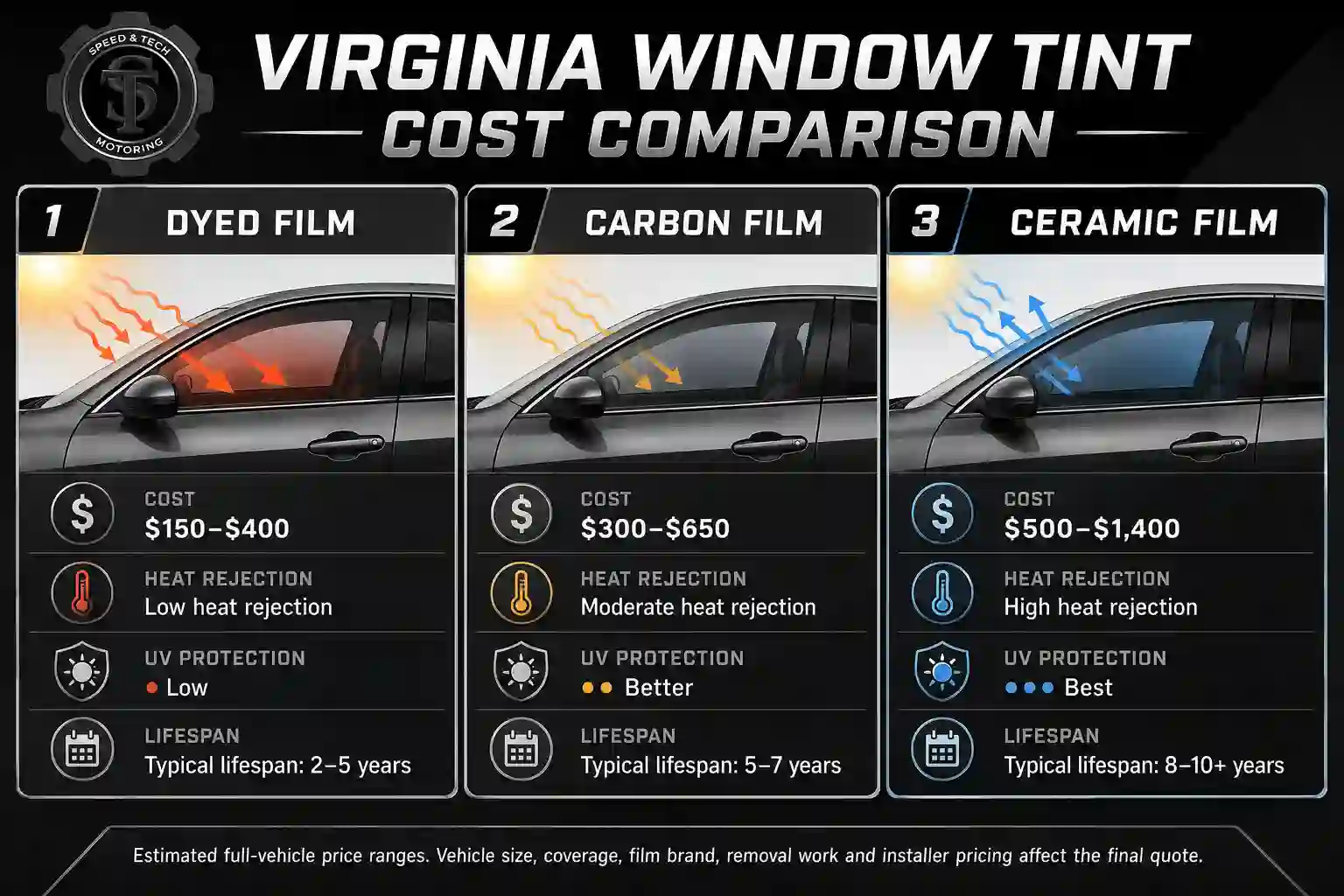
Dyed film costs the least, typically $ 150 to $ 400 for a full vehicle. It blocks glare and adds privacy but rejects less heat. Most dyed film lasts two to five years before fading.
Carbon Film Pricing
Carbon film runs $ 300 to $ 650 for most Virginia vehicles. It rejects more heat than dyed film and resists fading for five to seven years. Many drivers see it as the middle ground.
Ceramic Film Pricing
Ceramic film costs the most, usually 500 to 1,400 dollars depending on the vehicle. Speed & Tech Motoring installs XPEL PRIME XR+ ceramic film for most Sterling customers seeking maximum heat rejection. Ceramic film typically lasts eight to ten years or longer.
Premium Nano-Ceramic Film Pricing
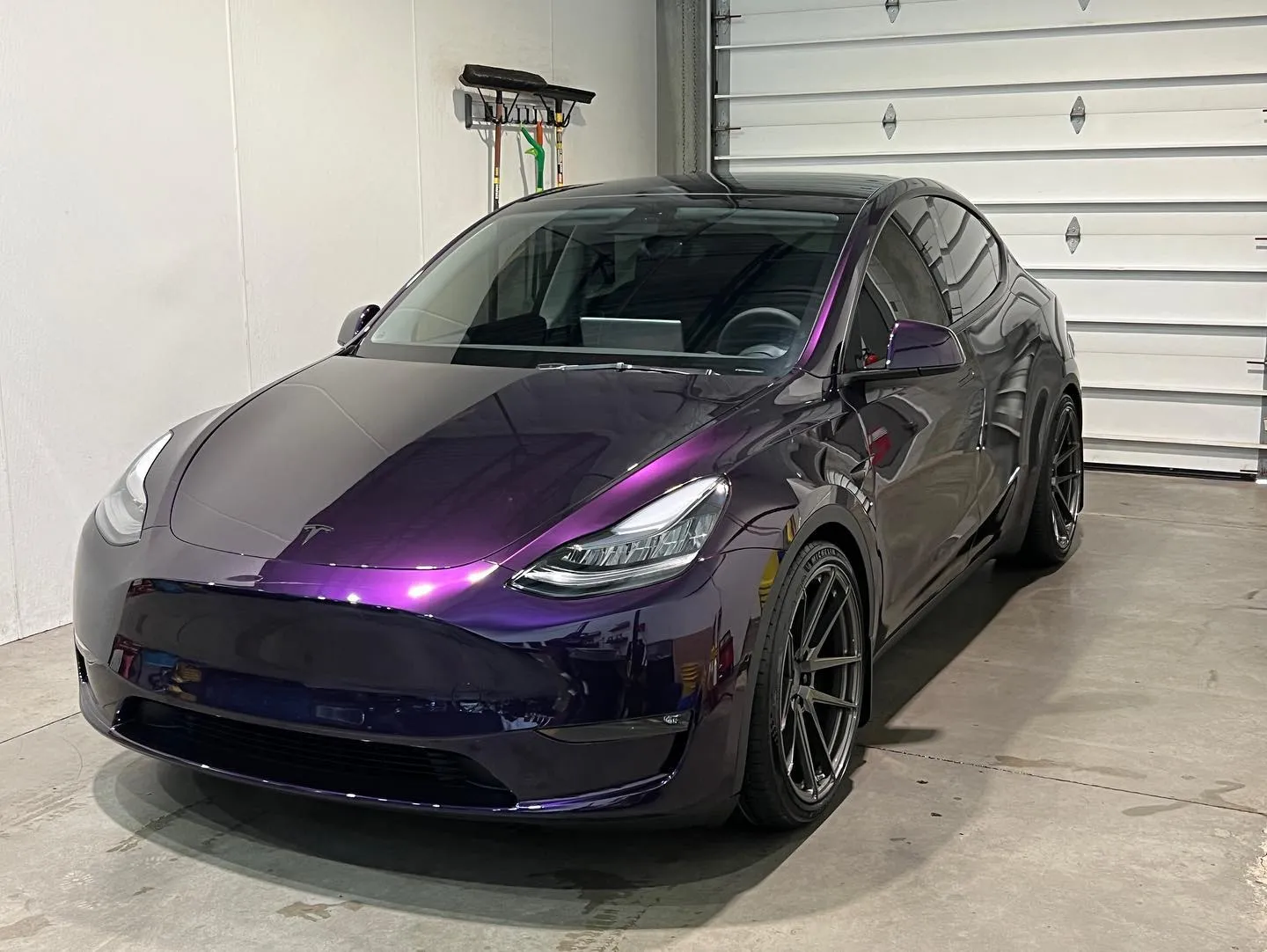
Premium nano-ceramic film sits at the top of the market, running $ 700 to $ 1,400 on SUVs and larger EVs. Tesla and Cybertruck owners in Sterling often choose this tier for its infrared heat rejection. Battery-powered vehicles benefit the most, since less cabin heat means less strain on the climate system and range.
How Long Does Window Tint Last Before It Needs Replacing
Tint lifespan affects the real cost per year, not just the upfront price. Dyed film often fades within five years, while ceramic can outlast a decade under normal use. A detailed look at how long ceramic window tint actually lasts shows why the higher upfront cost often pays off.
Replacing cheaper film twice can cost more than one quality ceramic install. Fading, bubbling, and purple discoloration are the clearest signs that film needs replacing. Virginia’s heat and UV exposure make film quality matter more than in milder climates.
How Does Virginia’s Tint Law Affect What You Pay
Virginia sets minimum light transmission limits that every legal install must meet. Front side windows need at least 50 percent VLT. Rear side and rear windows must have at least 35 percent VLT.
Windshields cannot carry tint beyond the manufacturer’s top strip, and reflectance cannot exceed 20 percent under Virginia Code § 46.2-1052. Speed & Tech Motoring installers check every quote against these limits before booking a job. Illegal tint can mean a fix-it ticket, so compliance is part of the price.
Is Professional Tinting Worth It Over a DIY Kit
DIY tint kits cost as little as $ 20 to $ 100, far less than professional installation. The savings come with real risk, since bubbling and peeling are common on a first attempt. Professional installation runs $ 200 to $ 1,400, depending on film and vehicle size.
Professional installers offer warranty coverage that DIY kits do not. Warranty protection often covers bubbling, peeling, and color fade for the life of the film. That coverage matters most on newer or leased vehicles.
A typical professional appointment takes one to three hours, depending on vehicle size and film type. Most Virginia shops use a dust-controlled bay to prevent debris from getting trapped under the film. A DIY install at home rarely matches that level of cleanliness.
What Should Drivers Expect During a Professional Tint Appointment
A professional appointment involves more than pressing film onto glass.
- Pre-install wash and inspection for existing chips or cracks
- Precision-cut film matched to each window using computer templates
- Edge and seam check before the vehicle leaves the bay
- Care instructions and warranty paperwork provided at pickup
Most shops start with a full vehicle wash to remove dirt from window edges. Technicians then cut film to match each window’s exact shape using computer templates. Curved or oddly shaped rear glass takes the most precise work.
Fresh tint needs three to five days to fully cure before you roll the windows down. A light haze or small water bubbles during curing are normal and clear on their own. Drivers should avoid washing new tint for about a week after installation.
How Can Virginia Drivers Avoid Overpaying for Window Tint
A few habits keep window tinting costs reasonable across Virginia.
- Get at least two or three quotes before booking, since prices vary by shop and region
- Ask about lifetime or multi-year warranty coverage included in the price
- Bundle tinting with detailing or ceramic coating for package pricing
- Confirm the film meets Virginia’s legal VLT limits before paying a deposit
Shops that skip a written estimate or avoid warranty questions are usually worth skipping too. A clear, itemized quote is the fastest way to spot a fair price.
Prices far below the going rate often signal lower-grade film or rushed installation work. A slightly higher quote from a certified, well-reviewed shop usually means fewer comebacks later.
Which Tint Film Gives the Best Value for the Price
Price alone does not tell the full story. Heat rejection and UV protection matter just as much for Virginia’s hot, humid summers.
| Film Type | Full Vehicle Cost | Heat Rejection | UV Protection | Typical Lifespan |
| Dyed | $150–$400 | Low | Blocks UV rays | 2–5 years |
| Carbon | $300–$650 | Moderate | Blocks UV rays | 5–7 years |
| Ceramic | $500–$1,400 | High | Blocks 99% of UV rays | 8–10+ years |
Ceramic film costs more per install but often costs less per year of use. Carbon film remains the most common middle choice for Virginia drivers balancing price and performance.
Daily commuters focused on comfort often get the most value from ceramic’s heat rejection. Drivers keeping a vehicle short term, or leasing, may find carbon film’s lower cost makes more sense.
What Add-Ons Change the Final Window Tinting Price
A quoted range rarely covers every part of the job. Several common add-ons shift the final bill up or down depending on the vehicle and the shop.
- Windshield sun strip: 50 to 150 dollars
- Full windshield tint (where legal film applies): 200 to 400 dollars
- Old tint removal before a new install: 50 to 200 dollars
- Bundled ceramic coating or detailing packages: often 10 to 15 percent off combined pricing
Vehicles with factory privacy glass on the rear windows sometimes need less film, which can slightly lower the total. A shop that itemizes each add-on makes it easier to compare quotes apples-to-apples.
Conclusion
Window tinting cost in Virginia depends mostly on region, film type, and vehicle size. In 2026, prices range from about $ 150 for basic dyed film to over $ 1,400 for premium ceramic. Northern Virginia tends to sit near the top of that range, while Richmond and Hampton Roads often run lower.
Pricing at Speed & Tech Motoring in Sterling and Loudoun County matches these statewide ranges. Drivers weighing options can also compare the best window tint films for Virginia vehicles before choosing a shop. A quick quote settles the exact number for any make or model.
Frequently Asked Questions
Why is window tinting more expensive in Northern Virginia than in Richmond?
Northern Virginia has higher labor costs and more demand for luxury and electric vehicle services than Richmond. Full sedan tinting often runs $ 300 to $ 900 in Sterling versus $ 200 to $ 600 near Richmond in 2026. Commercial rent and shop density widen that regional price gap further.
How much does it cost to tint all the windows on a car in Virginia in 2026?
Full vehicle window tinting in Virginia typically costs $ 200 to $ 950 in 2026, depending on region and film. Ceramic film costs more upfront but rejects the most heat and lasts eight to ten years before replacement, while dyed film is cheaper but usually needs redoing within five years.
What is the legal window tint darkness limit in Virginia?
Virginia law requires at least 50 percent light transmission on front side windows and 35 percent on rear side and rear windows in 2026. Windshields cannot be tinted beyond the manufacturer’s factory top strip, and reflectance cannot exceed 20 percent statewide under current state law.
Is ceramic window tint worth the extra cost compared to carbon film?
Ceramic film usually costs 200 to 500 dollars more than carbon but blocks more heat and lasts longer, often eight to ten years versus five to seven. For Virginia summers, that extra heat rejection lowers interior temperatures noticeably, especially on vehicles parked outdoors most of the day.
How much does it cost to remove old or bubbling window tint?
Removing old window tint in Virginia typically costs $ 50 to $ 200 per vehicle in 2026. Final price depends heavily on film age and adhesive type, since older dyed film with heavy bubbling takes noticeably longer to strip at most shops, adding time, labor, and cost to the bill.
Can drivers get a ticket for illegal window tint in Virginia?
Yes, driving with tint below Virginia’s legal VLT limits is a traffic infraction that can result in a fix-it ticket or fine. Officers check tint darkness with a handheld meter during a traffic stop, so confirming legal percentages before installation helps avoid the problem.