
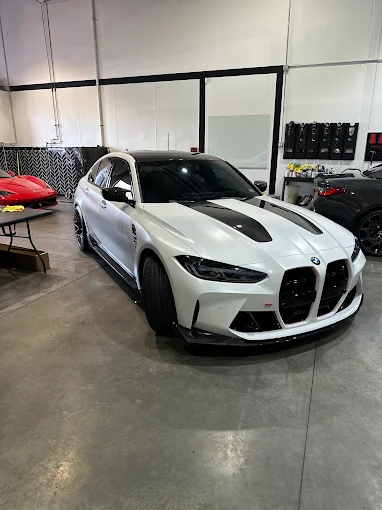
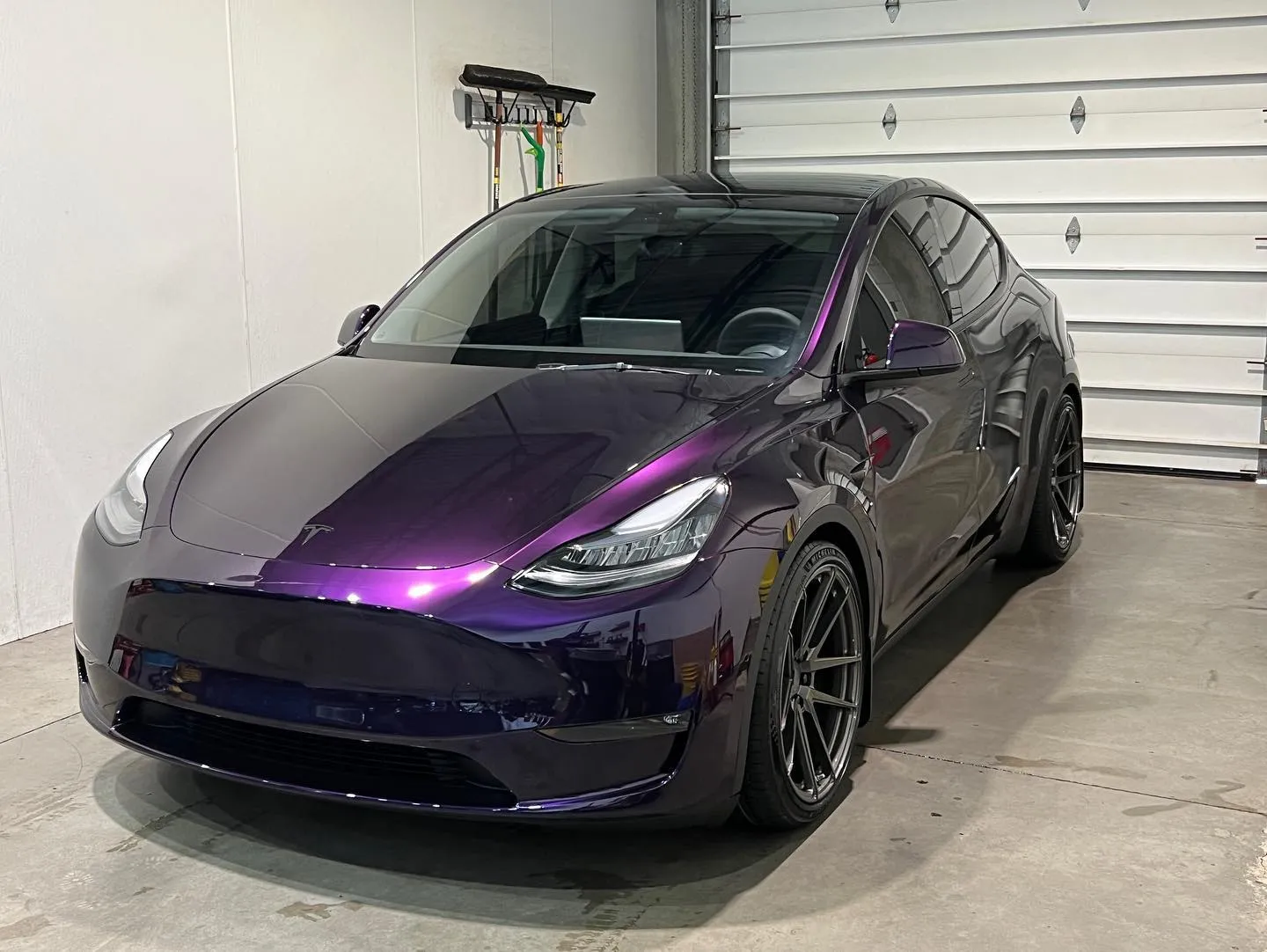
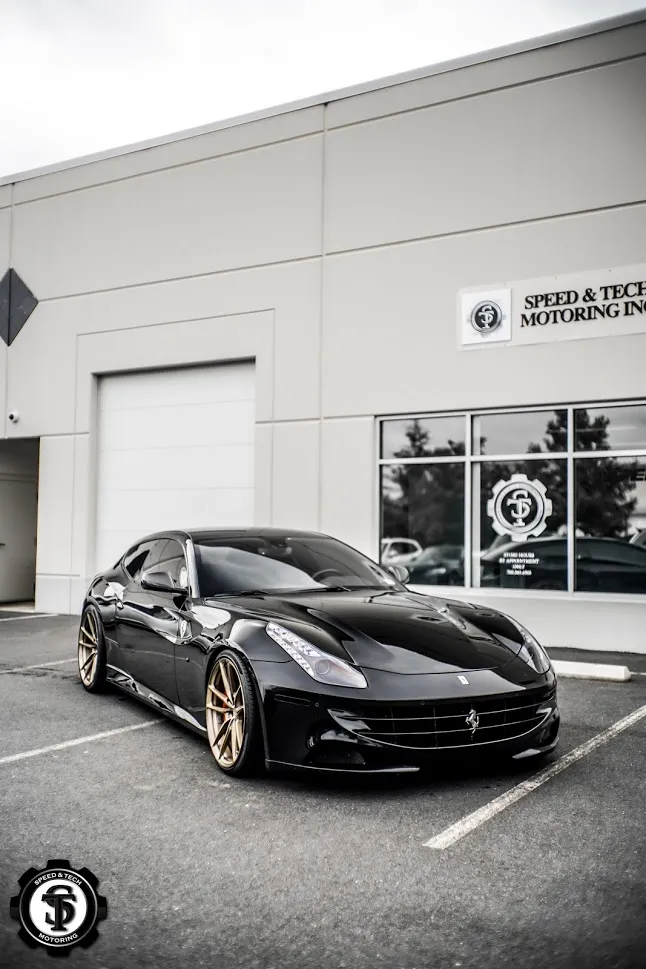
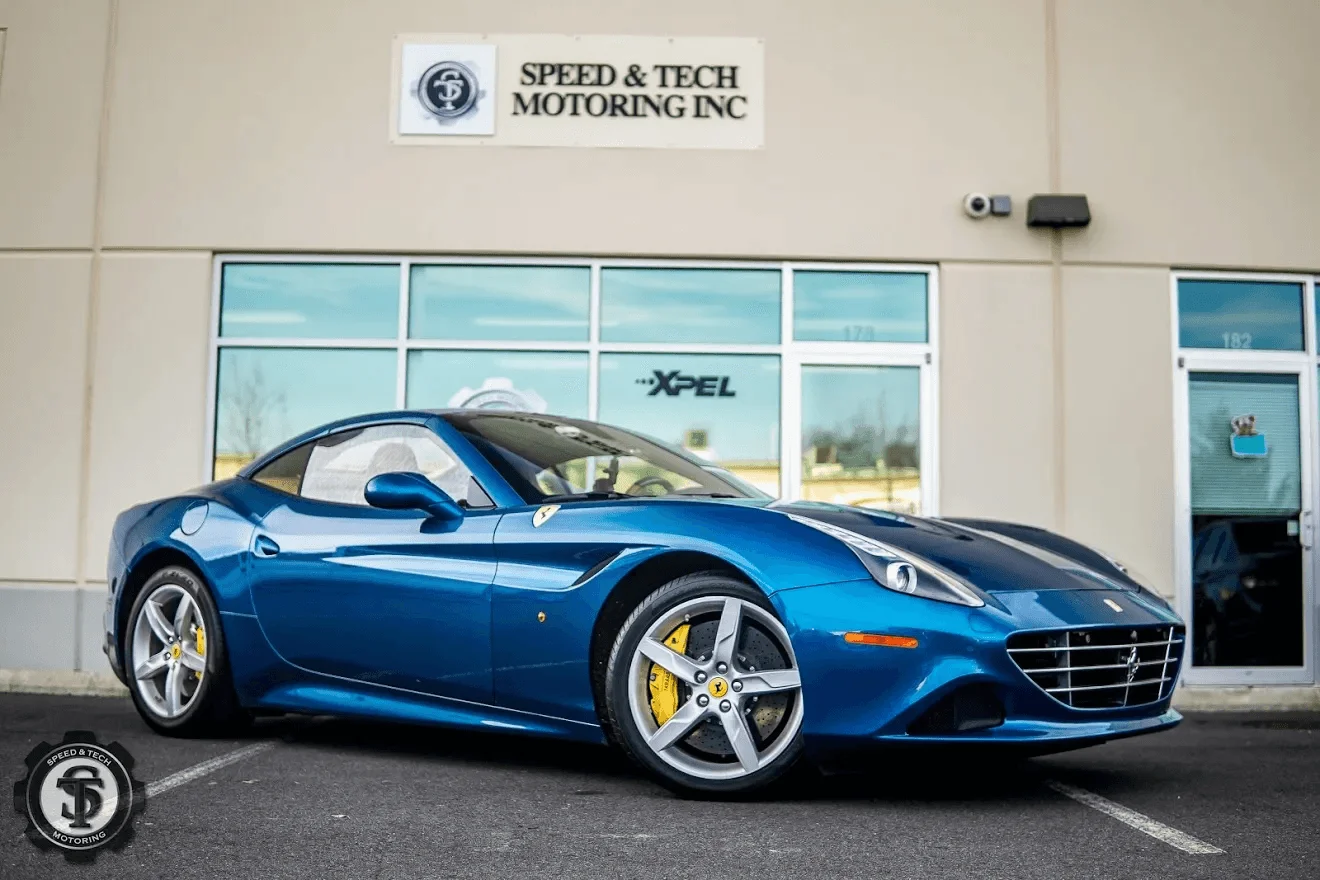
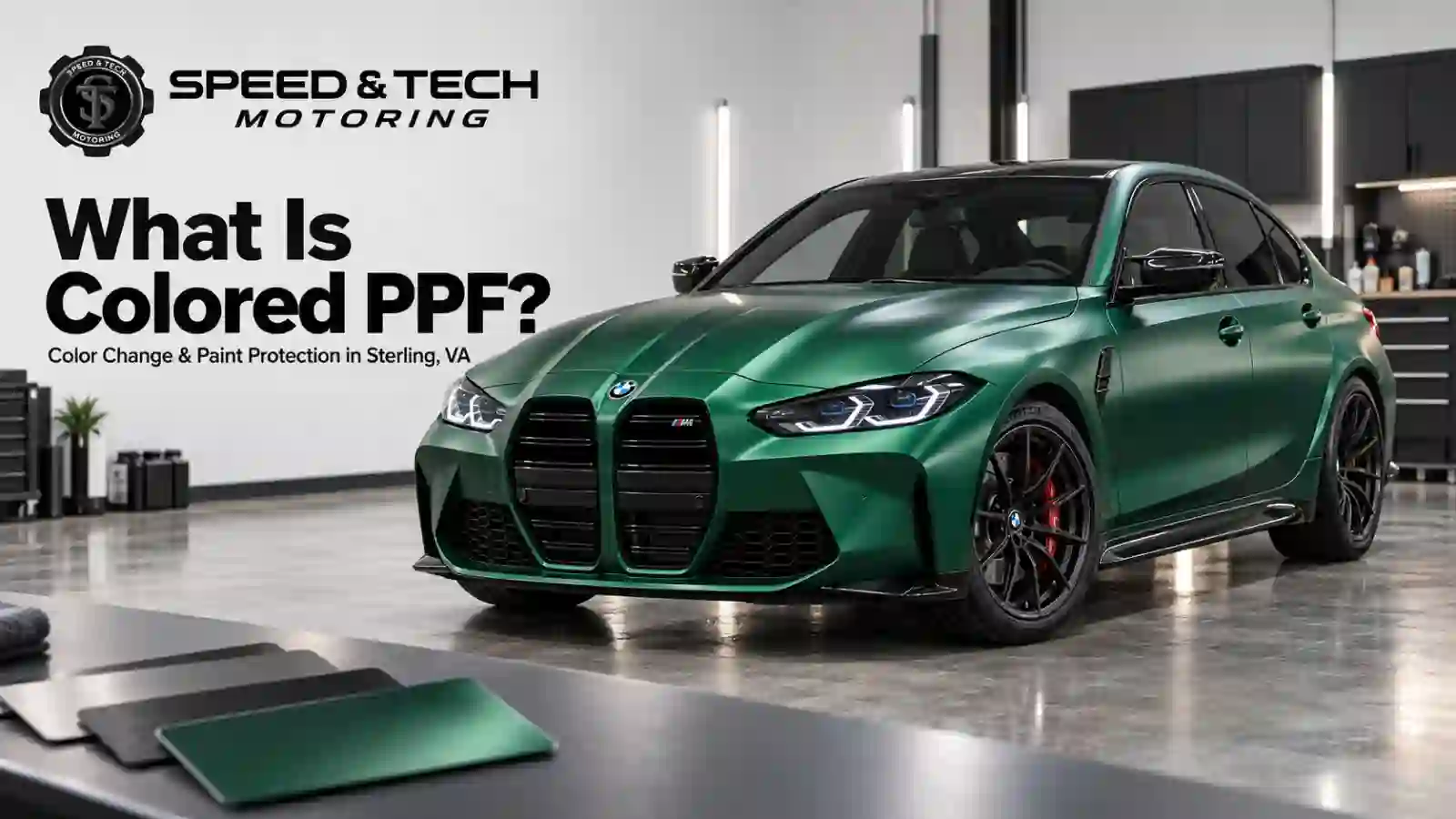
What is colored PPF, and is it just a wrap with a better name? Colored PPF is a multi-layer urethane paint protection film with built-in color. It guards paint against chips and light scratches while changing the finish. Speed & Tech Motoring installs it for drivers across Sterling and Loudoun County.
This guide covers how the film works, how it compares with clear PPF and vinyl, and where its limits sit. Drivers who know the look they want can browse films on the color PPF service in Sterling, VA.
What Is Colored PPF and How Does It Work?
Colored PPF is a pigmented urethane film that bonds to factory paint and carries its own color. The vehicle takes on a new shade, and the film absorbs chips that would otherwise reach the clear coat. Vinyl is made to decorate, whereas this film is made to protect first.
Most colored films share four working layers. Exact construction differs by manufacturer, so a film’s data sheet is the reliable reference.
- Topcoat: resists light scratches and, on some films, self-heals
- Color layer: sets the shade and the finish
- Urethane body: cushions small impacts from debris
- Adhesive: a pressure-sensitive layer that bonds the film to clean paint
How Is Colored PPF Different From Clear PPF?
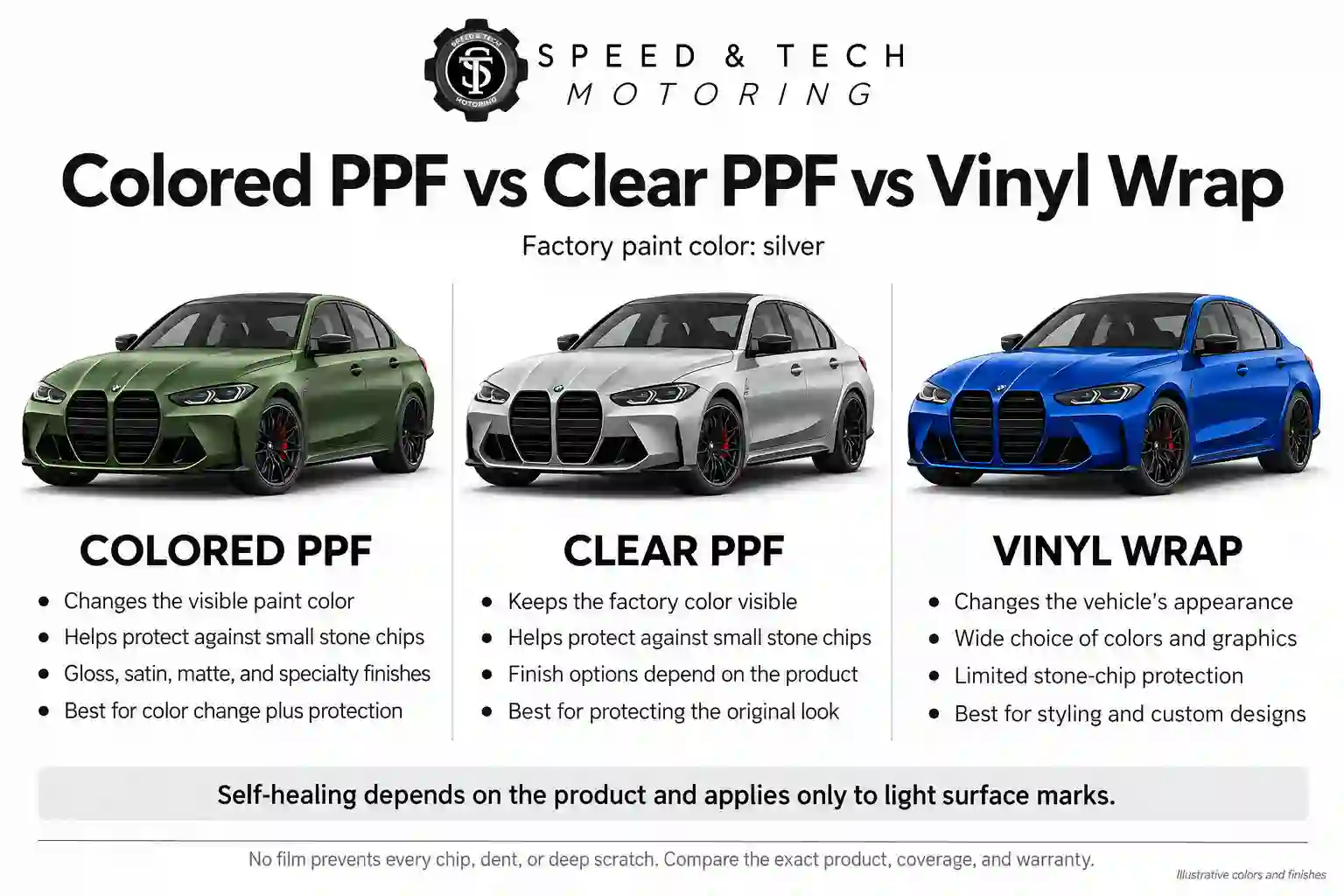
Both films use the same protective concept. Clear PPF is transparent, so the factory color stays visible. Colored PPF adds pigment, which replaces the visible paint color with a new one.
Installation changes with that pigment. Colored film must be cut and joined so seams land along body lines, and coverage usually needs to be broad. Installers at Speed & Tech Motoring plan seam placement panel by panel before cutting any film.
Clear PPF suits owners who like their factory paint and want to protect it. Colored PPF suits owners who want a new color without repainting and without giving up impact protection.
Is Colored PPF the Same as a Vinyl Wrap?
No. Both products change a vehicle’s color, but they do different jobs. XPEL lists its COLOR film at about 8 mil thick, compared with roughly 3 to 4 mil for vinyl.
That gap matters on the road. XPEL describes vinyl as thin enough to chip and scratch, while colored PPF is built to take small strikes. Vinyl wins on variety, with textures, prints and chrome that PPF colors rarely match.
Vinyl also costs less upfront, which suits shorter-term looks and trend colors. Colored PPF suits owners who want one finish for years, with built-in protection.
What Finishes and Colors Does Colored PPF Come In?
Common finishes include gloss, satin, matte and metallic. Gloss mimics factory paint, satin sits between gloss and matte, and matte gives a flat, non-reflective look. XPEL’s COLOR line, for example, lists gloss, satin and metallic finishes in 16 colors.
At the Sterling shop, Speed & Tech Motoring installs ULTRA, LEGEND and KLAR color lines. LEGEND covers matte and satin looks, while KLAR covers metallic and color-shifting finishes that change with the light angle. Availability varies by line, so a physical sample should confirm the shade before cutting the film.
Popular requests at the shop include gloss metallic black, matte stealth gray, satin pearl white and frozen blue or green. Shades can look different outdoors than under shop lights, so daylight sample checks help.
What Can Colored PPF Protect Against, and What Can’t It?
What Colored PPF Protects Against
The film is built to absorb the everyday hazards that reach paint. These include rock chips, gravel, road debris, light scratches and swirl marks. Bug splatter, bird droppings and tree sap also land on the film instead of the clear coat. Prompt cleaning still matters, since these contaminants can mark film surfaces too.
What Colored PPF Cannot Do
No film makes paint indestructible. A hard impact can still dent the panel underneath, and a deep gouge can cut through the film. XPEL’s warranty excludes stains, scratches and damage from rocks or road debris, so protection is real but never guaranteed.
Film also cannot fix paint that is already failing. Peeling clear coat and deep scratches need correction first, because the adhesive bonds to whatever surface lies beneath.
Does Colored PPF Really Self-Heal?
Self-healing comes from the topcoat, not from the color. XPEL states that its COLOR film self-heals light scratches and swirl marks. Its care guidance says heat from a heat gun or warm water activates the effect.
The effect covers only light marks in the surface layer. A scratch that cuts through the film needs repair or panel replacement. Confirm self-healing on other color lines in the manufacturer’s data sheet.
Full-Body or Partial Colored PPF: Which Coverage Makes Sense?
Full-body coverage delivers a complete color change and protects every covered panel. Partial coverage protects high-impact areas, but color appears only on those panels, so the result reads as an accent. Partial coverage rarely works for a true color change, because factory paint stays visible on the remaining panels.
Typical partial zones include:
- Front bumper and hood
- Fenders and mirrors
- Rocker panels and door edges
- Roof and trunk lid
Accent looks suit a colored hood and mirrors, or a track-style front end. Drivers who want a vehicle that looks fully repainted usually choose full coverage.
How Do Sterling Roads and Weather Affect Colored PPF?
Daily commuting on Route 28 and the Dulles Toll Road can send gravel and debris toward front-end paint. Bumpers, hoods, fenders and mirrors take the most strikes. That pattern explains why front-end coverage is the common starting point.
Northern Virginia winters bring road treatments, including brine and salt, that cling to lower panels. Summers add strong sun, and spring brings pollen and tree sap. Regular rinsing removes these deposits before they bake onto the film.
How Much Does Colored PPF Cost in Sterling, VA?
Colored PPF costs more than clear film and more than vinyl, and the final quote depends on coverage and vehicle. The shop’s 2026 Sterling guide lists these package ranges. Clear full-vehicle film at the same shop starts around $5,000, and a full vinyl wrap typically runs $2,500 to $5,000.
| Package | 2026 Price Range | Typical Coverage |
| Partial Front | $1,000 to $1,800 | Bumper, partial hood, mirrors |
| Full Front | $2,000 to $3,800 | Full hood, fenders, headlights |
| Track Pack | $3,200 to $5,500 | Full front plus rockers and rear high-wear areas |
| Full Vehicle | $6,500 to $11,000+ | Every exterior panel, full color change |
What Changes the Price
- Coverage area: partial front, full front or full vehicle
- Film line and finish: premium finishes can add to package pricing
- Vehicle size and panel complexity: larger or more curved bodies need more film and labor
- Paint condition: surface prep or correction adds time before film goes on
- Seam and edge work: color jobs take longer to plan than clear installs
Prices vary by vehicle, film and paint condition, so only a written estimate after inspection is exact.
How Is Colored PPF Installed, and How Long Does It Take?
Installation is a multi-step process, and preparation decides how clean the result looks. Installers apply film to clean, corrected paint, not over old film or vinyl. Trapped moisture and weak adhesion can follow.
Installation Steps
- Wash and decontaminate the paint, then inspect it for defects
- Correct imperfections that would show through the film
- Confirm the color and finish against a sample
- Cut the film from computer-guided patterns for each panel
- Apply the film with slip solution, then squeegee out air and moisture
- Heat the film to conform to curves and seal the edges
- Inspect edges and seams before delivery
A full-vehicle color change typically takes two to four days at the shop, depending on panel count and finish. Smaller packages finish sooner. XPEL advises about 72 hours of curing before the first wash.
Removal should also be professional. Controlled heat and correct technique let film come off without harming the paint underneath.
How Long Does Colored PPF Last?
No single number fits every vehicle. Lifespan depends on film quality, installation, sun exposure, washing habits and parking. Manufacturers publish warranties instead of promising a service life.
XPEL gives its COLOR film a 10-year warranty against manufacturing defects, including yellowing, cracking, blistering and delaminating. The published warranty terms also list that coverage as non-transferable.
Other color lines carry their own terms. Owners should request the warranty document for the exact film before booking. A useful question is how it treats color fade.
How Should Colored PPF Be Washed and Maintained?
Care is simple but specific. Good habits protect both the finish and the warranty.
- Hand wash with two buckets, a pH-neutral soap, and a soft microfiber mitt
- Dry with clean microfiber towels
- Choose touchless or hand washing over brush-style car washes
- Rinse bird droppings, sap, and bug residue soon after they land
- Keep pressure washer spray away from edges and seams
- Check edges for lifting or trapped dirt every few weeks
Matte and satin films generally need products made for non-gloss finishes, since polishes and waxes can add unwanted shine. XPEL confirms that a ceramic coating can go over its PPF without voiding the film warranty. Owners who want that added layer can ask the shop about timing.
Is Colored PPF Worth It?
Colored PPF fits owners who want a custom color, keep vehicles for years, and care about chip protection. It works on sedans, SUVs, trucks and EVs, not only on luxury or sports cars. Lease drivers may like that film can be removed to reveal factory paint before turn-in.
It is a weaker fit for owners who want chrome, prints or frequent color changes. Vinyl costs less and offers wider variety. Budget also matters, because a full color change is a larger investment than clear front-end film.
Buyers do look for original paint in good condition, but no film guarantees a higher sale price. Resale benefit is possible rather than certain.
Colored PPF vs Clear PPF vs Vinyl Wrap: Side-by-Side Comparison
| Feature | Colored PPF | Clear PPF | Vinyl Wrap |
| Main purpose | Color change with protection | Protection with factory look | Decoration |
| Appearance | New color, gloss, satin, matte or metallic | Factory color shows through | Widest range, including textures and prints |
| Impact protection | Built to absorb small strikes | Built to absorb small strikes | Minimal |
| Self-healing | On films with a self-healing topcoat | On films with a self-healing topcoat | Not typical |
| Thickness | XPEL COLOR lists about 8 mil | Varies by film | About 3 to 4 mil |
| Warranty | Set by manufacturer and line | Set by manufacturer and line | Set by manufacturer |
| Upfront cost | Highest of the three | Middle | Lowest |
| Best for | Owners wanting color plus chip protection | Owners keeping factory paint | Short-term or specialty looks |
Conclusion
Colored PPF is protective urethane film with color built in. It changes a vehicle’s look while taking chips and light scratches, though it cannot stop every dent or deep cut. Clear PPF protects without a color change, and vinyl changes color with far less protection.
Owners weighing a color change can bring a vehicle in for a sample check. Speed & Tech Motoring maps panels, finishes and film lines against a budget. The color PPF cost guide for Sterling lays out 2026 package pricing in more detail.
Frequently Asked Questions
How much does colored PPF cost in Sterling, VA?
Colored PPF in Sterling typically costs $1,000 to $1,800 for a partial front. A full color change runs $6,500 to $11,000 or more in 2026. Coverage, film line, vehicle size and paint condition all move the final quote. Only a written estimate after an in-person inspection is exact.
Can colored PPF be removed without damaging the original paint?
Yes, when a trained installer removes it with controlled heat and correct technique. The film is not permanent, so owners can return to factory paint at resale or lease turn-in. Older or poorly installed film can be harder to lift, so professional removal is always the safer route.
Can colored PPF go over existing clear PPF or vinyl wrap?
Installers generally advise against this. Film bonds best to clean, corrected paint, and layering over old film or vinyl can trap moisture and weaken adhesion. The usual plan is to remove old material and prepare the paint. Then the new color film goes on in one clean installation.
Does colored PPF fade or yellow in the Virginia sun?
Fade resistance varies by film line. XPEL’s COLOR warranty covers yellowing, cracking, blistering and delaminating from manufacturing defects. Its published summary does not list color fade. Garage parking and regular washing help, so ask any installer how a warranty handles fading.
Can a ceramic coating be applied over colored PPF?
Yes. XPEL says a ceramic coating can go over its film. Its FUSION PLUS coating will not void the film warranty. A coating adds a slick surface that makes washing easier. Matte and satin films need a coating made for non-gloss finishes, so confirm compatibility first. Ask about timing.
Is colored PPF worth it for a leased car or an EV?
It can be. Film removes to reveal factory paint, which may help at lease turn-in. EVs often have costly factory finishes that benefit from chip protection. The decision comes down to budget and ownership length, since full color coverage is a larger investment. Gains at resale are not guaranteed.