

Common window tinting mistakes usually begin before the film touches the glass. They show up later as bubbles, peeling edges, or a legal problem. Speed & Tech Motoring explains how each mistake happens and how to prevent it for drivers in Sterling, VA.
Careful prep, an honest film choice, and a legal check protect the result. Drivers comparing options can review window tinting in Sterling, VA before booking.
What Are the Most Common Window Tinting Mistakes?
The most common window tinting mistakes are poor prep, wrong film choice, careless cutting, ignored tint laws, and rushed aftercare. Each one leaves a visible or legal problem that is easier to prevent than to correct.
Installation errors include trapped dust, creases, misaligned edges, and gaps near the glass border. Choice errors include picking film by darkness alone or confusing dyed, carbon, and ceramic types. Aftercare errors include rolling windows down early and cleaning with harsh products.
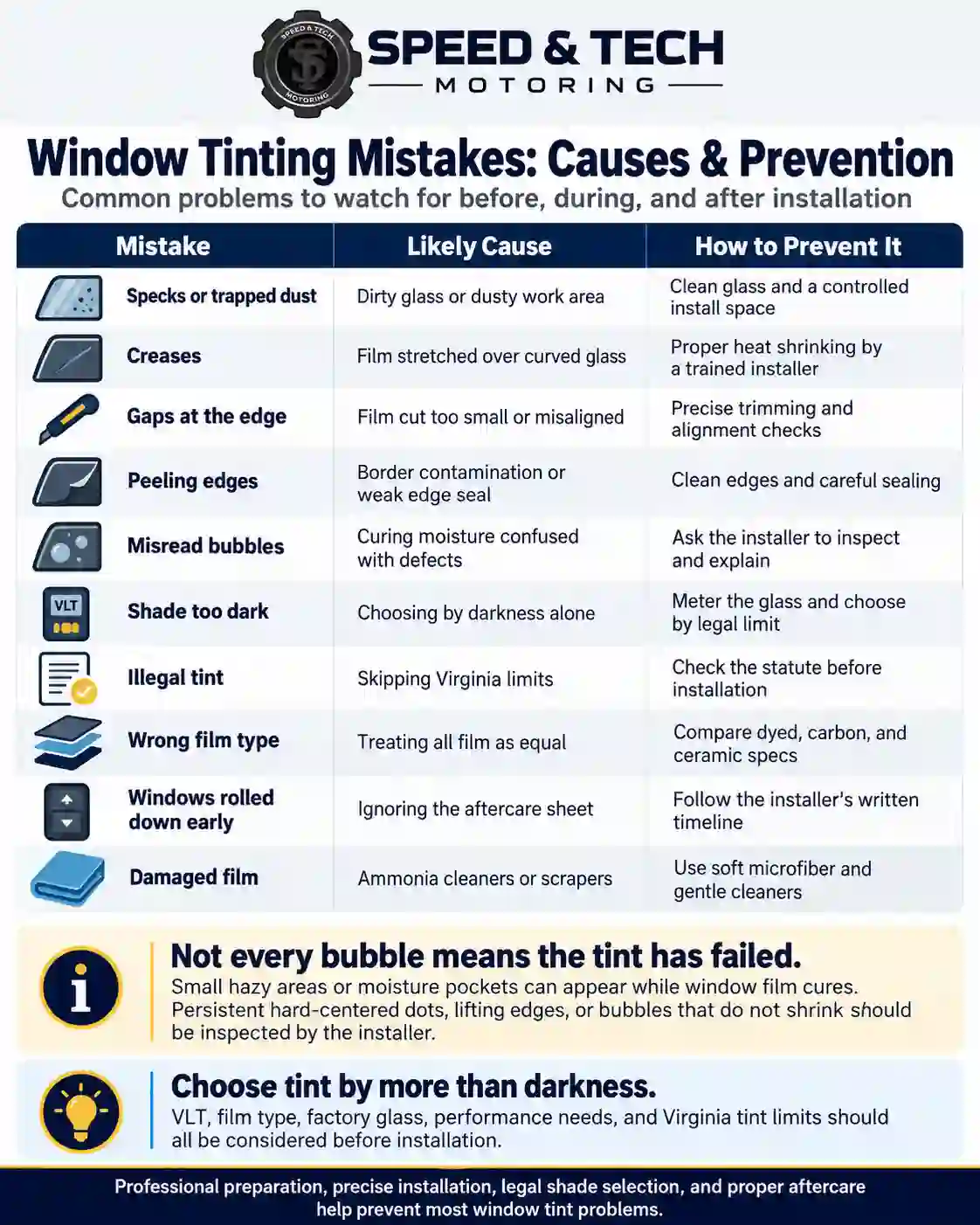
The sections below explain how each mistake happens and what prevents it. A summary table near the end lists every mistake with its cause and prevention.
Why Does Poor Surface Prep Cause Tint Problems?
Film adhesive bonds to whatever sits on the glass. Dirt, oils, and old residue become part of the finished job. Contamination under the film appears as specks, lumps, or hazy patches that are easy to spot in sunlight. Edges, door seals, and inner glass surfaces are common places for missed grime.
At Speed & Tech Motoring, the XPEL-certified team treats glass preparation as part of every tint installation. A clean surface and a controlled work area keep dust and fingerprints away from the adhesive.
Prevention is simple. Glass should look clean under bright light before film goes on. The work area should be free of loose dust.
How Do Cutting and Installation Errors Show Up in Window Tint?
Bad cutting leaves gaps along the glass edge, uneven borders, or film that rides onto the gasket. Misaligned rear panels can also leave uneven edges near defroster lines.
Creases form when film is stretched or forced over curved glass without proper shrinking. Trapped dust shows as small raised dots, and these usually call for removing and replacing the film.
Peeling edges can start from contamination at the border or a weak edge seal. Once an edge lifts, re-adhering it is difficult, so clean edges and precise trimming matter most.
Are Bubbles After Tinting Normal or a Sign of Failure?
Some moisture is normal after installation. Small hazy patches or water pockets can appear while the film cures. XPEL states that curing typically ranges from a few days to two weeks, depending on temperature and humidity.
Raised dots with a hard center, bubbles that do not shrink, and lifting edges point to a real defect instead. These usually come from trapped air, dust, or poor adhesion and need a professional inspection. Contact the installer early.
Customers who notice a problem should contact the installer rather than pressing on the film. The Speed & Tech Motoring team can inspect the glass and separate normal curing from a lasting defect.
Why Is Choosing Tint by Darkness Alone a Mistake?
Darkness only describes visible light transmission, known as VLT. It says nothing about film type, clarity, color stability, or legal limits for a given window.
Factory glass already blocks some light, and film VLT multiplies with it. A 70% film over 80% glass reads near 56%. A shade that looks mild on a sample can measure darker on the car.
Sterling commuters on Route 28 and the Dulles Toll Road benefit from shades chosen for night visibility and legal limits. Performance needs and glass type should guide the decision before darkness does.
What Mistakes Do Drivers Make Choosing Dyed, Carbon, or Ceramic Film?
Treating all film as equal is the main error. Dyed film is generally described as the most basic option. Carbon film is often chosen for color stability, and ceramic film is positioned as a premium option.
Some metalized films can interfere with GPS and cell signals, which matters for drivers who rely on navigation. Installers also commonly describe dyed film as more prone to color change over time.
Asking for the manufacturer’s documented specifications avoids paying for features a film does not list. Budget, glass type, and performance goals should decide the film type, not shade alone.
Which DIY Tinting Mistakes Lead Professionals to Redo the Job?
DIY kits invite trouble because tint needs a clean, dust-controlled space, precise trimming, and heat shrinking on curved glass. Home garages and driveways make dust and lint hard to control.
Common DIY errors include cutting film too small, using household cleaners, and dragging tools across the film. Each can leave gaps, hazing, or scratches. Curved rear windows with defroster lines are especially difficult.
Professional installation helps most on curved rear glass and when film must match a specific legal shade. A shop also has the tools and space to correct trimming and alignment before the film is set.
What Does Virginia Law Say About Tint Percentages Before Installation?
Virginia limits how dark tint can be. Front side windows must allow at least 50% total light transmittance. Rear side windows and the rear window must allow at least 35%.
Windshield tint is limited to the manufacturer’s sunshield area, and reflectance cannot exceed 20%. Multipurpose vehicles and pickups may go below 35% on rear windows, but front sides stay at 50%. Total transmittance includes the factory glass, so checking limits before installation avoids paying twice for removal.
The full text appears in Code of Virginia § 46.2-1052, and drivers should confirm current rules before choosing a shade.
Which Aftercare Mistakes Can Damage New Window Tint?
Rolling windows down too soon is the best-known aftercare error. Installers give different waiting periods, so the written aftercare sheet from the shop should set the date.
Harsh cleaning is the second error. XPEL advises avoiding ammonia-based cleaners, recommends soft microfiber cloths, and notes that ice scrapers and snow brushes can scratch film. Frosty Northern Virginia mornings make scrapers tempting, so they should only touch the outside of the glass.
Taping items to the film or letting seat belt buckles strike the glass can also mark it. Gentle handling during the curing period protects the finish.
Can Failed Window Tint Be Repaired or Does It Need Replacement?
Minor curing moisture usually clears without work. Peeling edges, dust bubbles, creases, and purple or blistered film generally need new film. The damage sits in the film or adhesive itself.
Removal uses heat or steam to release the adhesive, followed by cleaning residue from the glass. Rear windows need extra care around defroster lines.
A new installation on bare, clean glass avoids stacking fresh film on old problems. A written estimate before removal and replacement keeps the scope clear.
Window Tinting Mistakes, Causes, and Prevention at a Glance
| Mistake | Likely Cause | How to Prevent It |
| Specks or trapped dust | Dirty glass or dusty work area | Clean glass and a controlled install space |
| Creases | Film stretched over curved glass | Proper heat shrinking by a trained installer |
| Gaps at the edge | Film cut too small or misaligned | Precise trimming and alignment checks |
| Peeling edges | Border contamination or weak edge seal | Clean edges and careful sealing |
| Misread bubbles | Curing moisture confused with defects | Ask the installer to inspect and explain |
| Shade too dark | Choosing by darkness alone | Meter the glass and choose by legal limit |
| Illegal tint | Skipping Virginia limits | Check the statute before installation |
| Wrong film type | Treating all film as equal | Compare dyed, carbon, and ceramic specs |
| Windows rolled down early | Ignoring the aftercare sheet | Follow the installer’s written timeline |
| Damaged film | Ammonia cleaners or scrapers | Use soft microfiber and gentle cleaners |
Conclusion
Most window tinting mistakes trace back to rushed prep, shade chosen by darkness, or skipped legal checks. Curing moisture differs from true defects, and failed film generally needs replacement rather than repair.
For Sterling drivers, Speed & Tech Motoring can help avoid these errors. The guide to Virginia tint percentages for cars and SUVs covers legal limits in more detail.
Frequently Asked Questions
What are the most common window tinting mistakes drivers make?
Common mistakes include poor prep, wrong film choice, careless cutting, darkness-only shade choice, ignored Virginia limits, and rushed aftercare. Each leaves bubbles, peeling, or legal trouble. Prevention starts with clean glass, honest film selection, and a legal check before installation.
Are bubbles after window tinting normal or a sign the film is bad?
Small hazy patches can appear while film cures. XPEL says curing typically takes a few days to two weeks, depending on temperature and humidity. Hard-centered dots or bubbles that persist usually mean trapped dust or air and need a professional inspection. Contact the installer early.
How long should I wait before rolling down my windows after tinting?
Waiting times vary by installer and film, so the written aftercare sheet from the shop should set the date. XPEL notes curing typically ranges from a few days to two weeks, depending on temperature and humidity. Ask the installer for a specific date in writing before leaving the shop.
What goes wrong when tinting car windows yourself?
DIY tint often traps dust, creases on curved glass, or leaves edge gaps because home spaces are hard to clean. Household cleaners and scraping tools can also damage the film. Professional installation helps most on curved rear windows and when a legal shade must be matched exactly.
What window tint percentage is legal in Virginia for front and rear windows?
Virginia requires at least 50% total light transmittance on front side windows. Rear side and rear windows need at least 35%. Factory glass counts toward the total. Multipurpose vehicles and pickups have rear exceptions, so check Code of Virginia § 46.2-1052 before choosing a shade.
Can bad window tint be fixed or does it have to be removed?
Peeling edges, dust bubbles, creases, and purple or blistered film generally cannot be repaired and need replacement. Installers use heat or steam to release the old adhesive and clean the glass. Ask for a written estimate covering removal, cleanup, and new film before work begins.