
Virginia drivers comparing XPEL PRIME XR and XR Plus usually want one answer: is the upgrade worth it. Both are nano-ceramic films with no metal content, so neither interferes with phone or GPS signal. The real difference sits in infrared heat rejection and how consistent that performance stays across shades. Speed & Tech Motoring installs both lines through trusted window tinting in Sterling, VA. This exact question comes up daily during quotes. This guide breaks down the real specs so you can choose with confidence before booking.
What Is the Real Difference Between XPEL PRIME XR and XR Plus
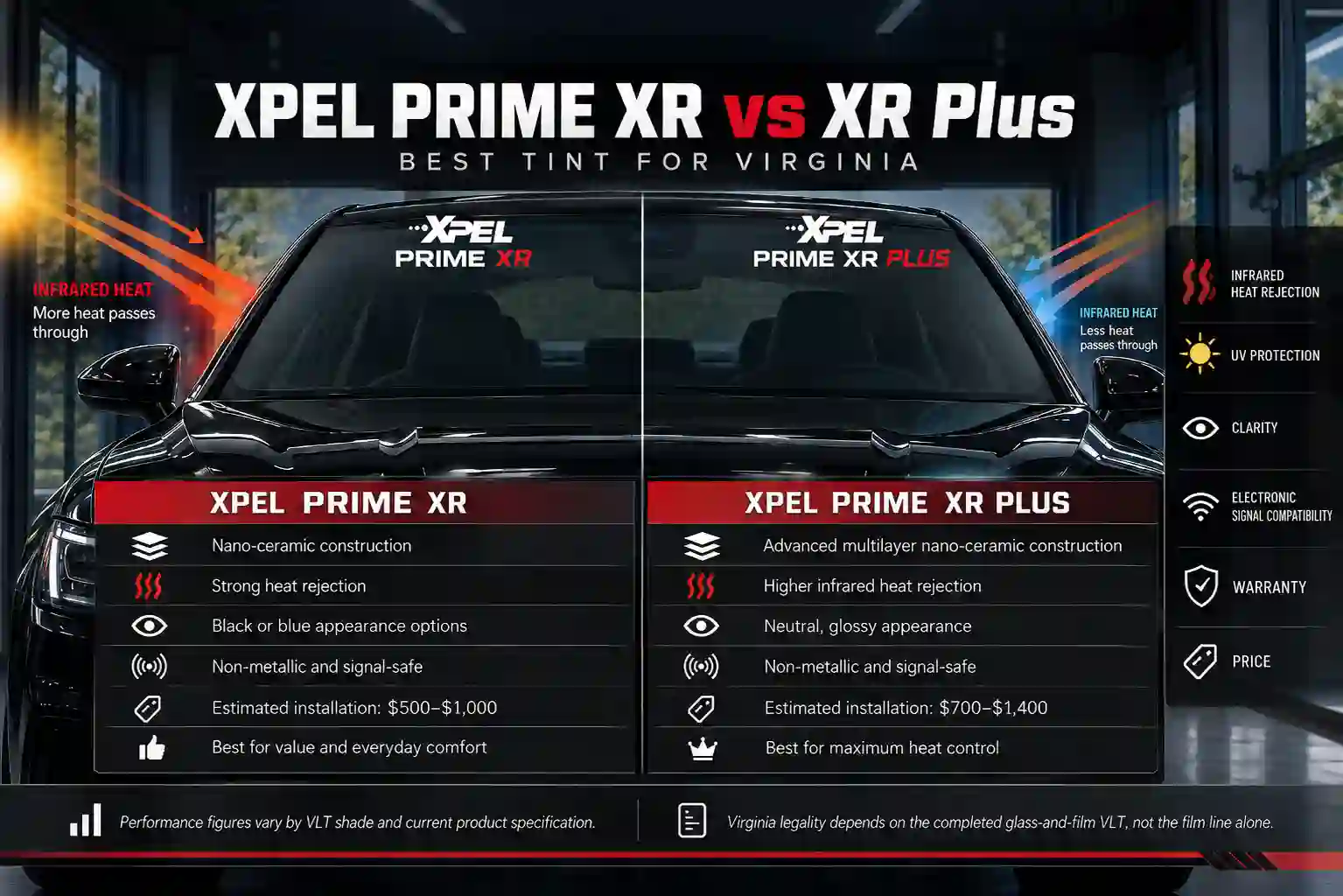
XR is a single-layer nano-ceramic film sold in Black and Blue finishes. XR Plus uses a multi-layer nano-ceramic construction built for higher, more consistent heat rejection. Both block UV rays and carry a lifetime transferable warranty against bubbling, peeling, and cracking.
- XR: single-layer nano-ceramic, Black or Blue finish
- XR Plus: multi-layer nano-ceramic, clear glossy finish
- Both: non-metallic, signal-safe, lifetime transferable warranty
- Both: available across the same range of VLT shades
The layer count is what drives the performance gap. More layers let XR Plus filter more infrared wavelengths without darkening the glass further. That construction difference is the reason for the price gap covered later in this guide.
How Much More Infrared Heat Does XR Plus Block Than XR
Infrared rejection is where the two films separate most. XR Plus blocks 92 to 96 percent of infrared heat depending on shade. XR Black blocks 78 percent at most shades, rising to 85 percent only at the lightest available option.
At a typical mid-range shade, XR Plus rejects roughly 18 percentage points more infrared heat than XR Black. That gap shows up as a real difference in dashboard and seat temperature on a parked car. Manufacturer tolerances on these figures run plus or minus 3 percent.
XPEL PRIME XR vs XR Plus: Full Spec Comparison by Shade
Manufacturer test data, not marketing language, tells the real story between these two films.
| Shade | XR Plus VLT | XR Plus IR Rejection | XR Plus TSER | XR Black VLT | XR Black IR Rejection | XR Black TSER |
| 5 | 5% | 96% | 71% | 5% | 78% | 66% |
| 15 | 12% | 96% | 69% | 15% | 78% | 65% |
| 70 | 67% | 92% | 52% | 68% | 85% | 49% |
Speed & Tech Motoring pulls these figures directly from XPEL’s published spec sheet, not estimated averages. TSER, or total solar energy rejected, measures overall heat blocked from the sun. XR Plus leads TSER at every shade tested, though the gap narrows at the lightest options.
Which Film Meets Virginia’s Tint Law at Every Shade
Virginia requires at least 50 percent VLT on front side windows and 35 percent on rear windows. Both XR and XR Plus come in shades that easily meet these limits. Film choice does not change what is legal, since VLT and heat rejection are separate specs.
If you’re unsure about exact percentages, review Virginia’s tint law in full detail first. That page lists every shade limit by window position.
Choosing XR Plus at a legal 50 percent front shade still delivers the higher infrared rejection. The legal limit affects darkness, not which film line performs better.
Does XR Plus Cost More Than Standard XR in Virginia
XR Plus typically costs more than standard XR for the same vehicle and coverage. In Sterling, standard ceramic film like XR generally runs $500 to $1,000 depending on vehicle size.
Premium nano-ceramic film like XR Plus typically runs $700 to $1,400. SUVs and larger EVs land at the higher end of that range. The price gap reflects the extra manufacturing layers in XR Plus, not a marketing markup.
Drivers can see current Sterling tint pricing by film type for exact 2026 numbers by vehicle. Most of that extra cost pays back through comfort on hot Virginia afternoons.
Speed & Tech Motoring quotes both film lines side by side before any work begins. Square footage, shade, and film line are listed separately on every estimate. That breakdown makes it easy to see exactly what the XR Plus upgrade adds to the total.
Which Film Handles Northern Virginia Summers Better
Northern Virginia summers push cabin temperatures well above outside air temperature on parked vehicles. XR Plus consistently blocks more infrared heat, which is the wavelength responsible for most of that buildup. Drivers who park outdoors at work or home notice this difference most.
XR still delivers meaningful heat rejection compared to no tint at all. The gap between the two films matters more for commuters logging long hours in direct sun. Garage-kept vehicles see less practical benefit from the upgrade.
Clarity, Reflection, and Appearance: Is There a Visible Difference
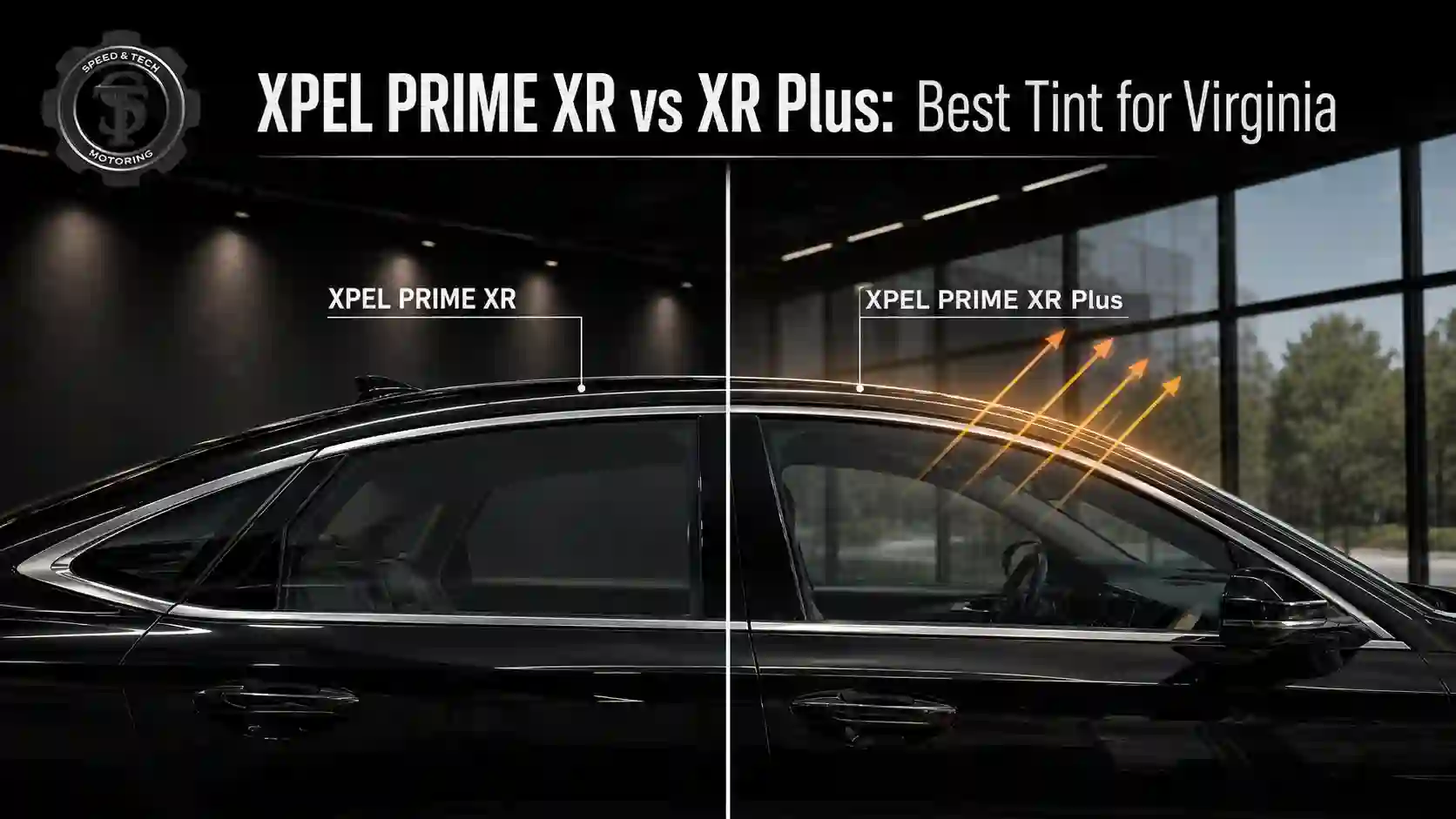
Both films keep visible light reflection low, generally under 10 percent at every shade tested. Neither film looks mirrored or overly dark. XR Plus has a clear glossy finish, while XR is offered in a true black or a blue-tinted finish.
Color choice comes down to personal preference, not performance. A blue-tinted XR film changes the look of the glass more than XR Plus does. Drivers wanting the most neutral, factory-like appearance usually lean toward XR Plus.
Which Film Lasts Longer: XR or XR Plus
Both XR and XR Plus carry the same lifetime transferable warranty against bubbling, peeling, cracking, and discoloration. Neither film is metal-based, so neither is prone to the oxidizing bubble failure seen in older dyed films. Real-world lifespan depends more on installation quality than the specific film line chosen.
Reviewing ceramic tint lifespan expectations for Sterling drivers covers what actually shortens or extends film life. Improper curing or low-quality adhesive causes most early failures. Film selection between XR and XR Plus is not a durability decision on its own.
Which Vehicles Benefit Most From XR Plus
EVs and vehicles with large glass areas benefit the most from the extra infrared rejection. Tesla, Rivian, and other EVs rely more on cabin climate efficiency tied to battery range. Less heat entering through glass means less energy spent cooling the cabin.
Daily commuters logging long hours in direct sun also see a bigger practical benefit. Weekend or garage-kept vehicles may not justify the extra cost as strongly. Vehicle use pattern matters as much as vehicle type when choosing between the two films.
How to Decide Between XR and XR Plus for a Specific Vehicle
Budget, parking habits, and daily sun exposure should drive the final decision. A vehicle parked outdoors most of the day benefits more from XR Plus than one kept in a garage.
XPEL’s official PRIME spec sheet lists every shade and rejection figure for both lines. Reviewing it before a quote helps you decide faster.
Drivers who want the broader buying picture can read the full guide to choosing window tint in Sterling. That guide covers legal shades and film types beyond these two lines.
A quick conversation with an installer usually settles the decision faster than specs alone. Bringing a target shade and budget to that conversation speeds things up.
What Happens During a Professional PRIME XR or XR Plus Installation
Installation starts with a full inspection of the glass for chips or cracks. The installer removes any leftover adhesive from the old tint first.
Each window is then cut to an exact computer pattern rather than trimmed by hand. That keeps edges clean around defrost lines and factory tint strips.
Film goes on wet, using a slip solution that lets installers position it precisely. Installers squeegee out air and excess moisture before the glass dries. Curing time varies by shade and weather, typically two to five days before windows can be rolled down.
Both XR and XR Plus follow the same installation process. The difference between the two lines sits in the film’s internal layers, not how it goes on the glass. Vehicles with curved rear glass or complex SUV liftgates usually take longer to finish.
Conclusion
XR Plus rejects more infrared heat than standard XR at every shade XPEL has tested. That performance gap comes from extra nano-ceramic layers, which is also why XR Plus costs more. Both films meet Virginia’s legal VLT limits and carry the same lifetime warranty.
The right choice depends more on parking habits, sun exposure, and budget than on which film is objectively better. Vehicles kept outdoors in direct Virginia sun see the clearest benefit from XR Plus.
Reading how window tinting balances privacy and visibility rounds out the decision beyond heat performance. Speed & Tech Motoring compares both film lines against your vehicle’s exact glass, not a generic estimate.
Frequently Asked Questions About XPEL PRIME XR and XR Plus
Is XPEL PRIME XR Plus really worth the extra cost over standard XR?
XR Plus blocks noticeably more infrared heat at nearly every shade, often 15 to 20 percentage points more than XR Black. For vehicles parked outdoors in Virginia sun daily, that difference usually justifies the extra $200 to $400 over the film’s lifetime, especially for commuters.
What is the actual heat rejection difference between XR and XR Plus?
XR Plus blocks 92 to 96 percent of infrared heat across most shades, while XR Black blocks around 78 percent at typical shades. The gap narrows slightly at the lightest available shade options for both film lines, though XR Plus still leads at every tested point on the spec sheet.
Can XPEL PRIME XR or XR Plus interfere with phone or GPS signal?
No, both XR and XR Plus are non-metallic nano-ceramic films, so neither interferes with phone, GPS, or toll transponder signals. This is one of the main reasons ceramic film replaced older metalized film for most Virginia installations over the past decade, including at dealerships.
Which XPEL film is legal at Virginia’s 50 percent front window limit?
Both XR and XR Plus come in shades that easily meet or exceed Virginia’s 50 percent front window VLT requirement. Film line choice affects heat rejection, not legal compliance, since both lines offer plenty of compliant shade options for front, rear, and back glass on any car, truck, or SUV.
Does XR Plus look different from standard XR on the glass?
Yes, XR Plus has a clear glossy finish, while XR is available in true black or a blue-tinted finish. Visible light reflection stays low on both films, so neither produces a noticeably mirrored appearance at any shade, day or night, from outside the vehicle looking in at the driver.
Is XR Plus worth it for a Tesla or other EV in Virginia?
Many EV owners choose XR Plus since less cabin heat means less energy spent on climate control, which can help preserve driving range. The extra infrared rejection matters most for EVs parked outdoors during hot Virginia afternoons, especially on long highway commutes across Northern Virginia.